
Product Categories
Share With
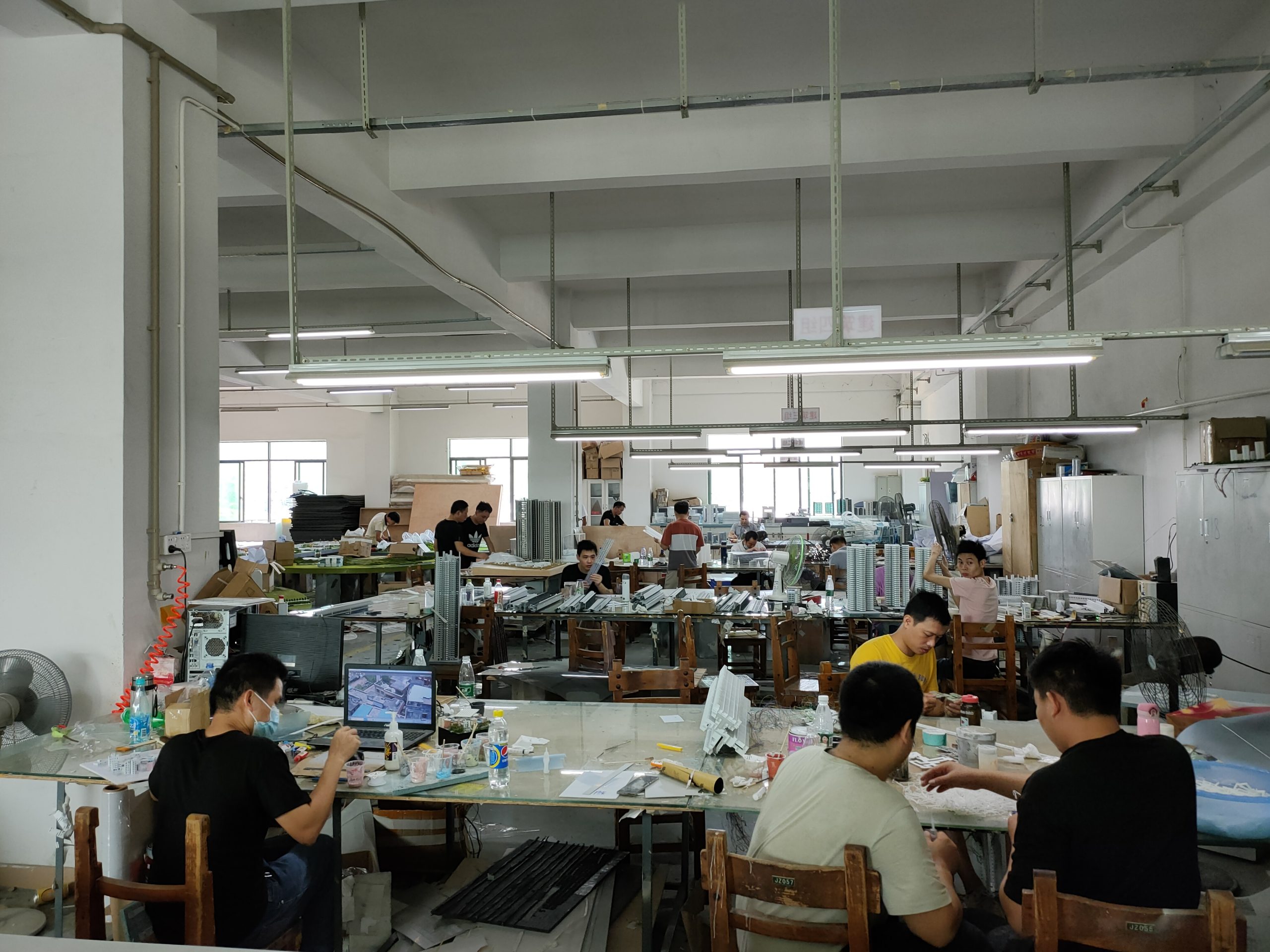
A scale model is a physical representation of an object that maintains accurate relative proportions (its scale) but is larger or smaller than the original.
They are used for design, testing, education, and hobbies.
Engineering & Architectural Models: Used to visualize concepts, test designs (wind tunnels, water tanks), and present to clients.
Industrial Design Models: Prototypes for products like cars, appliances, and electronics.
Hobby Models: Built for fun, display, or competition (plastic model kits for airplanes, ships, cars, Gundam, military dioramas).
Educational Models: Used in schools to demonstrate scientific principles (anatomy, geology, solar system).
Film & Special Effects: Used for forced perspective, miniatures in cinematography (e.g., spaceships, buildings).
"Scale model" refers to a physical representation of an object that is larger or smaller than the actual object, maintaining accurate proportions and details. They are used in many fields for visualization, testing, or hobby purposes.
Common Uses:
1. Architecture & Real Estate
· Architects build scale models of buildings, neighborhoods, or urban plans.
· Real estate developers use them to showcase projects.
2. Engineering & Product Design
· Engineers create models of machinery, vehicles, or industrial plants for testing and presentation.
· Prototypes of products (e.g., cars, appliances) are often first made as scale models.
3. Film & Special Effects
· Miniature models are used for movie sets, spacecraft, or creatures (e.g., ships in Titanic, cities in Blade Runner).
4. Hobbies & Collectibles
· Model kits (plastic, wood, or metal) for cars, aircraft, ships, or military vehicles.
· Railway modeling (model trains with detailed landscapes).
· Figure modeling (historical or fantasy characters).
5. Education & Science
· Solar system models, molecular structures, or geological features.
· Demonstrations of historical sites or archaeological reconstructions.
6. Marketing & Trade Shows
· Companies use detailed models to showcase upcoming products or facilities.
Key Concepts:
· Scale Ratio: Expressed as a ratio like 1:10 (1 unit on the model = 10 units on the real object).
· Small scale (e.g., 1:1000) for large objects like cities.
· Large scale (e.g., 1:24) for detailed models like cars.
· Materials: Plastic, wood, resin, metal, paper, or 3D-printed components.
· Detailing: Can include paint, weathering, electronics (lights/motors), and miniature figures.
Examples by Scale:
· Aircraft models: 1:72, 1:48, 1:32
· Cars: 1:18 (large detail), 1:64 (small, like Hot Wheels)
· Trains: Varies widely (HO scale 1:87, N scale 1:160, etc.)
· Ships: 1:350, 1:700
Interesting fact: Scale modeling is also an art form, with competitions worldwide focusing on historical accuracy, craftsmanship, and creativity.
Read More